Articles Tagged with employment contract

employee relocating
You leave a steady job, move your family, and sign a new lease because an employer describes an opportunity worth relocating for. Months later, the company eliminates your position, or you discover that the job was never what you were told it would be. Does signing an at-will offer letter mean you have no case against that employer? Not necessarily. California Labor Code section 970 prohibits knowingly false statements used to persuade someone to relocate for work. An at-will agreement can create a serious obstacle to a claim based on promised job security. But it does not automatically defeat a claim that the employer lied about the actual job. That distinction was central to the case of White v. Smule, Inc. (2022) 75 Cal.App.5th 346.

The case: recruited to build a team, terminated five months later 

Kenneth White alleged that Smule recruited him to help reorganize its project management operations. According to his evidence, the company needed an experienced leader to develop and manage a team, improve its processes, and support expansion. White left his job in Washington and moved his family to the Bay Area. He signed an offer letter stating that his employment was at will, and that representations outside the letter were not binding. Five months later, Smule terminated him, saying his position was being eliminated.
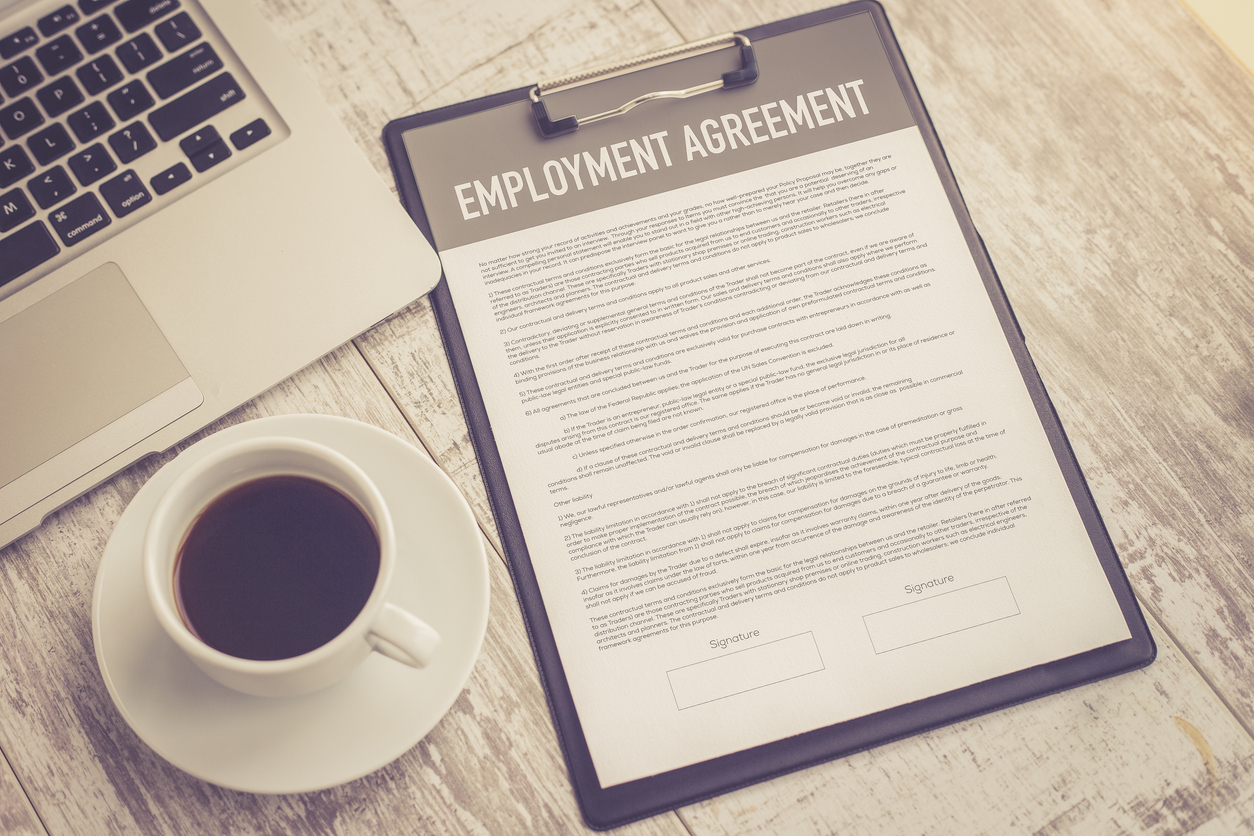
Employee reviewing an arbitration agreement before pursuing a wrongful termination claimA recently published California Court of Appeal decision, Morales v. Superior Court, provides an excellent example of why the precise wording of an arbitration agreement matters. A relatively small difference in contractual language ultimately determined whether an employee’s discrimination and wrongful termination claims would be decided in private arbitration or in court. For employees with potentially significant discrimination, retaliation, or wrongful termination claims, that distinction can be extremely important because the chances of winning a case in court are generally much higher than in arbitration.

Sylvia Morales worked for San Diego Gas & Electric Company (SDG&E) for nearly 20 years. After SDG&E terminated her employment in 2024, Morales filed a lawsuit alleging disability discrimination, failure to provide reasonable accommodation, failure to engage in the interactive process, retaliation, and wrongful termination in violation of public policy. Her claims were based on California’s Fair Employment and Housing Act (FEHA), the California Family Rights Act (CFRA), and California public policy. SDG&E responded by asking the court to force Morales into arbitration.

And initially, the employer won. The trial court concluded that Morales had agreed to arbitrate her claims and ordered the case into arbitration. Morales challenged that ruling in the California Court of Appeal, which reached the opposite conclusion.

Contact Information